
Spencer County Arrest Records and Charges
Spencer County arrest records and court charge records come from different parts of the local justice system. The arrest record is tied to the sheriff, jail, booking office, or arresting agency. It can help confirm that a person was arrested or incarcerated locally, but the sheriff's limited criminal record service is not a final disposition source. The court charge record begins when the State of Indiana files formal counts in Spencer County Circuit Court.
The Spencer County sheriff and jail page provides the local law-enforcement and jail contact path for arrest-side records.
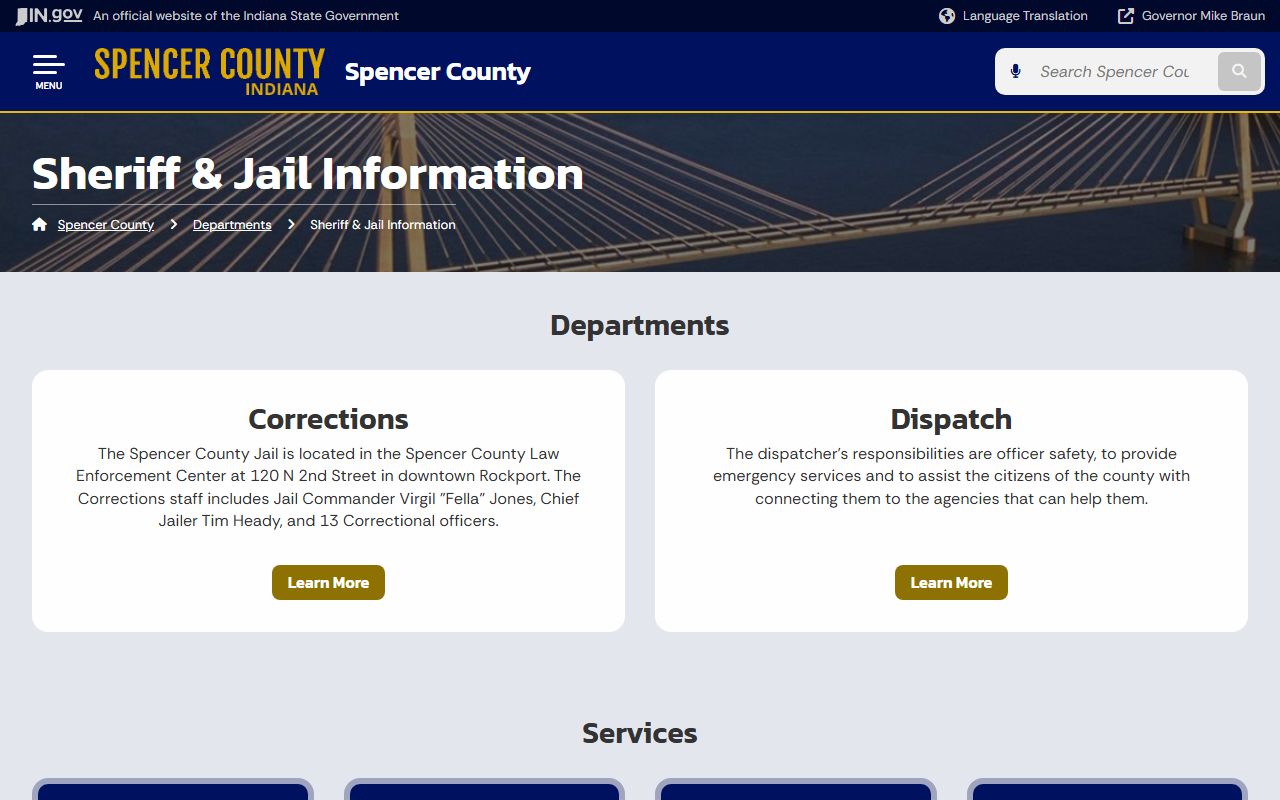
That source matters because arrest information may start at the sheriff or jail, while court charges and outcomes must be checked through the court record.
The Spencer County Prosecutor's Office represents the State of Indiana in felony and misdemeanor criminal prosecutions from crimes committed in Spencer County. The Clerk of the Circuit Court maintains the criminal court file after charges are filed. For the full case record, including pleas, motions, dispositions, and sentencing, use Spencer County criminal court records.
Find Spencer County Arrest Records
Use a two-channel search. For custody, booking, sheriff reports, limited local incarceration checks, fingerprints, and report photos, start with the Spencer County Sheriff and Jail. For formal charges after arrest, search Indiana MyCase and then request missing or official records from the Clerk of the Circuit Court. The same incident can create a sheriff record, a prosecutor charging decision, and a court case, but those records are not held in one single database.
- Check the arrest or custody side through the Spencer County Sheriff and Jail when the question is booking, incarceration, or sheriff report access.
- Search Indiana MyCase by defendant name or case number to find filed court charges.
- Filter to Spencer County or Spencer Circuit Court when the search interface allows it.
- Open the criminal case and review the counts, statute references, offense level, plea, and disposition for each charge.
- Contact the Clerk of the Circuit Court if a charging document, order, or certified case copy is not linked online.
For current custody and jail-search context, Spencer County inmate records cover the jail and statewide custody portals. Arrest records and charge records do not automatically prove current custody.
Spencer County Charges After Arrest
Charges after arrest are the formal accusations that move a matter from law enforcement into court. The Spencer County Prosecutor decides what charges to file for felony and misdemeanor prosecutions. A single arrest can lead to no charge, one charge, or several counts. The court record may later show that a count was amended, reduced, dismissed, or resolved by plea or trial, so the filed charge must be read with later docket entries.
| Document | Who Uses It | What It Does |
|---|---|---|
| Complaint | Officer or prosecutor, depending on the case path. | States the accusation used to start or support a criminal case. |
| Information | Prosecuting attorney. | Files the formal criminal counts in court without relying on a grand jury indictment. |
| Indictment | Grand jury process where used. | Accuses a person through a grand jury charging process rather than ordinary prosecutor filing. |
Indiana and Spencer County research confirms the prosecutor role, not a district attorney label. The local office prosecutes felony and misdemeanor crimes, juvenile adjudications, state traffic violations, and related victim-service matters. Once a charge is filed, the charge appears in the court case with the case number, count, description, level, and later disposition when public.
Spencer County Charge Status
Charge status changes are a core reason to use the court case rather than relying only on the arrest record. The sheriff page says limited criminal record checks cover incarcerations in the Spencer County Security Center and apply only to the original charge. They do not include final disposition information such as resulting charges, fines, or sentencing. The court record is where the status of each formal charge is tracked.
| Status | What It Means in a Court Charge Record |
|---|---|
| Pending | The count remains unresolved and later docket entries should be checked for hearings, motions, plea, or trial settings. |
| Amended | The filed count was changed, often through a later prosecutor filing or court order. |
| Reduced | The charge was lowered to a different offense or level as reflected in the case record. |
| Dismissed | The count or case was ended without a conviction on that charge. |
| Disposed | The count has an outcome, such as guilty plea, verdict, dismissal, or other final action. |
| Expunged or restricted | Public access may change after a qualifying expungement or sealing order. |
The sheriff report copies and photos page explains the sheriff record-copy channel.
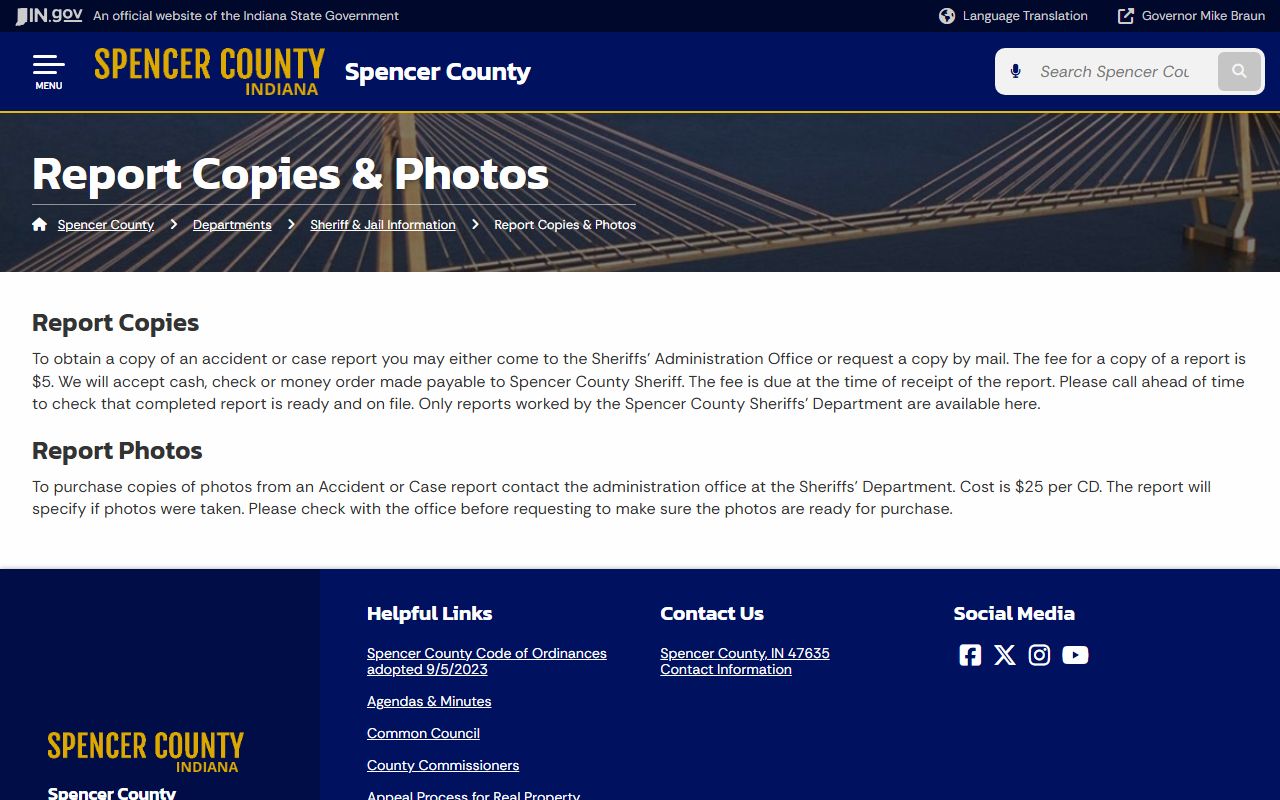
That sheriff report process is useful for incident records, while the court case remains the source for charge status and disposition.
Charges Versus Convictions
An arrest can lead to a charge, but a charge is not a conviction. The Spencer County court record may show an original charge, an amended charge, a dismissed charge, a plea to a different count, or a sentence after conviction. Read each count separately. One case can have several charges, and each charge can end in a different way.
| Point | Charge | Conviction |
|---|---|---|
| Meaning | A formal accusation filed after arrest or summons. | A legal finding of guilt by plea, verdict, or qualifying judgment. |
| Record location | Charge list, charging document, and early case entries. | Disposition, judgment, sentencing order, and later docket entries. |
| Can be changed | May be amended, reduced, or dismissed. | May be appealed, corrected, or later restricted if expungement applies. |
| Best check | Read the count details and later status entries. | Confirm the final disposition and sentence. |
Charge Codes and Severity
Spencer County court charges can show a statute, offense description, count number, and level or class. The research identifies criminal charges as a standard field in Indiana court records, including count number, statute, offense description, level or class, plea, disposition, sentencing, probation, no-contact order, and bond. Those fields help separate a charge accusation from the later case outcome.
The Indiana criminal law and expungement title is one source tied to criminal charges and record restriction rules.
That state-law source supports checking the statute and expungement framework instead of reading an arrest entry as the final outcome.
- Count
- A separate charge within a criminal case.
- Disposition
- The outcome of a count, charge, claim, or case.
- Sentence
- The punishment or court order imposed after conviction.
- Expungement
- A process that seals or restricts qualifying arrest, charge, or conviction records from public access.
Sheriff Arrest Record Channels
The sheriff and jail are at the Law Enforcement Center in downtown Rockport. The sheriff page names Sherri Heichelbach as sheriff and gives the sheriff and jail phone, fax, and email. For arrest-side information, the official channels include in-person or written limited criminal record requests through the Booking Office, accident or case report copies, report photos, fingerprints, sex-offender registry contact, and local law-enforcement phone referrals.
Limited criminal record checks are not handled by phone or fax. The requester must provide the full name and at least one identifier such as date of birth or Social Security number. The research says these checks are often requested for adoptions, travel visas, pre-employment, and similar purposes, but they cover only Spencer County Security Center incarcerations and only the original charge.
Spencer County Sheriff and Jail
120 N 2nd Street
Rockport, IN 47635
(812) 649-2286
Email: sheriff@spencercounty.in.gov
Restricted Spencer County Charge Records
Juvenile records, sealed records, expunged records, protected identifiers, medical details, addresses of protected persons, and other excluded information are not ordinary public arrest or charge records. Indiana Code title 31 controls many juvenile records. Indiana Rules on Access to Court Records, Rule 5, controls many court-record exclusions. Indiana Code 35-38-9 addresses qualifying expungement of arrest, charge, and conviction records.
- Sealed or restricted
- Public access is hidden, redacted, or withheld under rule, statute, or court order. Juvenile, adoption, protected-party, medical, financial, and other confidential material can fall in this group.
- Expunged
- Qualifying arrest, charge, and conviction records are restricted from ordinary public access after the court grants relief under Indiana expungement law.
- Practical step
- Ask the clerk or court about access authority, and follow up with law enforcement or state repositories if a public listing remains visible after an order.
Note: A sheriff arrest record can show the original charge, but the court disposition controls the final case result.